Simple vs Compound Interest: What’s the Difference?
Interest is the price of money — what you earn on savings or pay on a loan. Whether it’s “simple” or “compound” changes the outcome more than most people expect, especially over long periods.
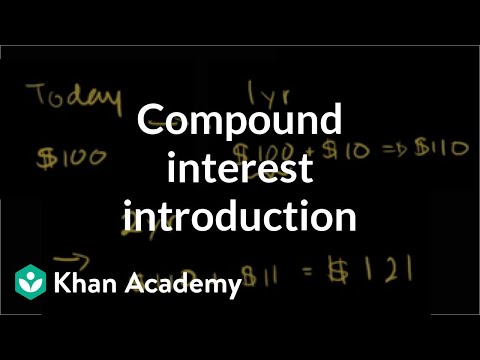 ▶ Compound Interest Introduction — Khan Academy — opens YouTube on click
Simple interest
Simple interest is calculated only on the original amount (the principal). The formula is:
Interest = Principal × Rate × Time
Put $10,000 in an account paying 5% simple interest for 10 years and you earn 10,000 × 0.05 × 10 = $5,000, for a final balance of $15,000. The interest is the same every year because it’s always based on the original $10,000.
Compound interest
Compound interest is calculated on the principal plus all the interest already earned. Your interest earns interest — which is why it grows faster and faster. The formula is:
Final = Principal × (1 + Rate ÷ n)(n × Time)
where n is how many times per year interest compounds. The same $10,000 at 5% compounded monthly for 10 years grows to about $16,470 — roughly $1,470 more than the simple-interest version, just from interest earning interest.
Why compounding frequency matters
The more often interest compounds, the more you earn (or owe). The same rate compounded daily yields a little more than compounded yearly, because interest is added to the balance more often. The differences look small over a year but become significant over decades — this is the engine behind long-term investing.
You can try all of this with our Interest Calculator: switch between simple and compound, change the compounding frequency, and watch the final balance change.
Compound interest cuts both ways
Compounding is wonderful when you’re saving and painful when you’re borrowing. Credit-card debt compounds against you, which is why balances can balloon. Loans and mortgages use a related idea — amortization — where each fixed payment covers the interest due plus a slice of the principal. Our Loan Calculator shows the monthly payment and total interest for any loan amount, rate, and term.
The takeaway
- Simple interest is linear and easy to predict — common for short-term loans.
- Compound interest accelerates over time — the basis of savings, investments, and most debt.
- Start early. Because compounding builds on itself, time is the most powerful ingredient in growing money.
Need a quick percentage along the way? The Percentage Calculator handles the everyday "what’s X% of Y" questions.
Frequently asked questions
Is compound interest always better than simple interest?
For savings and investments, compound interest earns you more. For debt, compound interest costs you more. Whether it’s "better" depends on which side of the transaction you’re on.
How does compounding frequency affect the total?
More frequent compounding (monthly or daily vs. yearly) produces a slightly higher total, because interest is added to the balance more often and then earns its own interest.
What formula does compound interest use?
Final = Principal × (1 + Rate ÷ n) ^ (n × Time), where n is the number of compounding periods per year.